
Your “Quiet Quitting” Might Be Operational Collapse in Disguise
Today’s PSA: You’re not lazy, and you’re not flaky. You’re just exhausted.
If you’ve found yourself zoning out during meetings, avoiding decisions, ghosting your own Slack channel, or secretly fantasizing about selling your practice to become a goat farmer in Vermont… it’s not because you’re failing at anything.
It’s a giant, flashing red light that your business model isn’t working for you anymore.
The world calls it “quiet quitting,” but for practice owners, it’s rarely quiet. It looks like overwhelm, resentment, rage-adding tasks to your calendar and then rage-deleting them two hours later.
We want to break it down in a different way. A way you can run your business that actually sets you up for real, sustainable success in Q1 and beyond.
What “Quiet Quitting” Looks Like in Practice Ownership
Quiet quitting for business owners isn’t the same as the corporate hustle “quiet quitting” we see all over our favorite social media platforms. When you mentally check out as a business/practice owner, it shows up in quieter (but more costly) ways:
Slack messages left unread for… a while
Questions from your team that you mean to “circle back to” but never do
Meetings you skip or show up to and immediately disassociate
Email dread that turns into avoidance (been there, done that…a lot)
Resentment of every single calendar event, even the ones you created
A persistent exhaustion that no nap, bath, or weekend can cure
Sound familiar? If you’re an employee, this can be a sign of burnout. But for practice owners, it’s something bigger: it’s the slow drip of operational collapse.

The Real Culprit Behind the Burnout
Here you are holding up a team (even if it’s a team of one), making every decision, fixing things no one else seems to notice, and when you’re actually doing the work you got into this to do, you’re wondering why it feels so hard to care lately. (Don’t get us started on the dumpster fire that is 2026. We’re strictly talking about in your business life right now.)
Most practice owners we work with aren’t disorganized and are definitely not unreliable people. They’re just people operating inside broken systems (or no systems at all).
That means:
No real delegation (or delegated tasks that bounce back to you anyway)
No role clarity, so you become the de facto catch-all (yay you!)
No proactive structure, so you’re putting out fires all day
No time for actual leadership, because you’re stuck in admin/clinical chaos
That overarching burnout doesn’t always come from caring too much about every little thing. It often comes from leading without the right support.
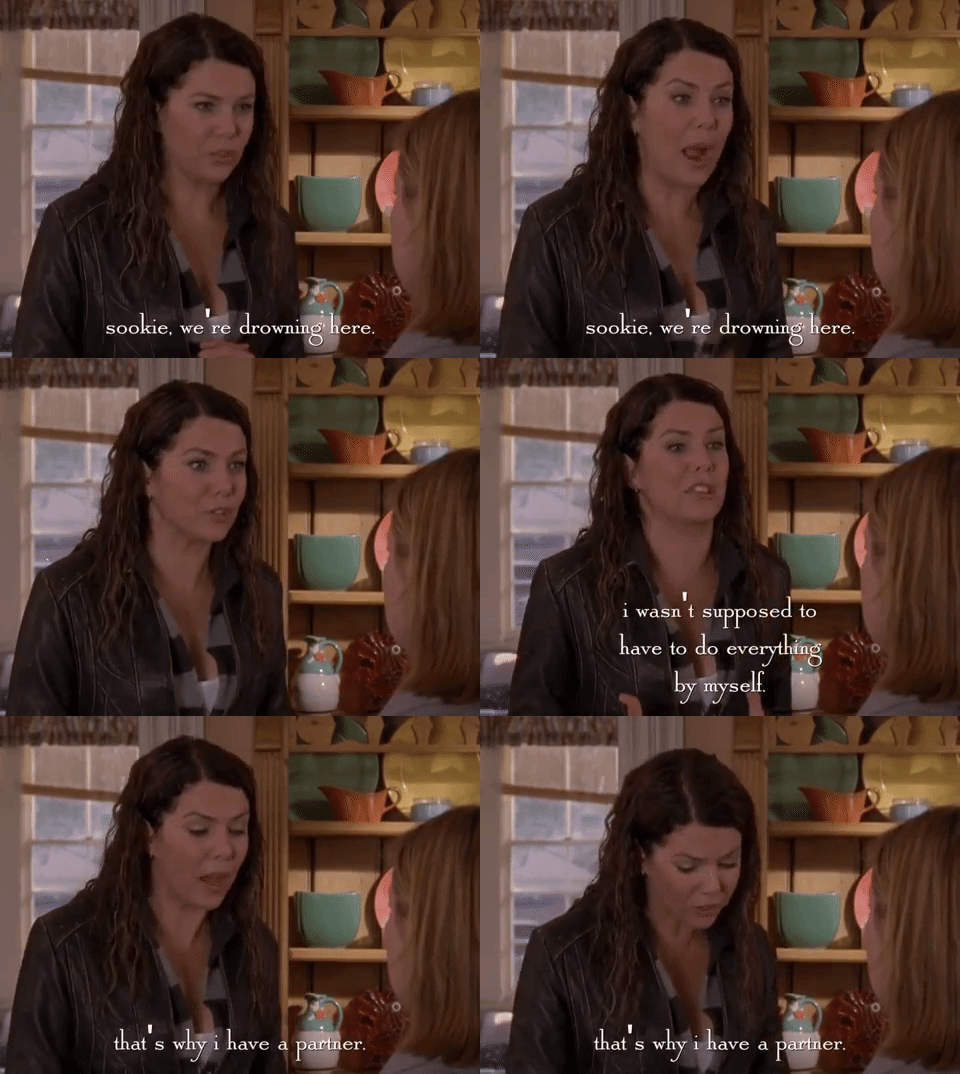
True Burnout vs. Operational Collapse
If you’re unsure whether you’re just tired or on the edge of a full-blown business breakdown, start here:
Ask yourself:
☐ Am I still doing the same tasks I hired someone else to do?
☐ Are decisions constantly delayed because they need my input?
☐ Do things fall apart or behind when I’m not actively involved?
☐ Am I resentful of my team, even though I know they’re trying?
☐ Have I thought, “Maybe I’m just not cut out for this” in the last 2 weeks?
If you checked more than one box, we’re not looking at a burnout bubble bath situation. When the urge isn’t “take a break” but “escape entirely,” that’s how you know the problem isn’t you. Yes, it’s fixable without burning everything to the ground.

Here’s What To Do Before You Break
Literally nothing will be resolved by working harder or being tougher. Read: LITERALLY NOTHING. Instead, you need to start by leading differently.
Here’s how:
✅ Run a CEO Energy Audit
Track everything you do for a week, then highlight what actually requires your leadership or involvement. (Spoiler: It’s less than you think. Like a lot less.)
✅ Identify the Top 3 Tasks That Are Only Yours
This is the work that only you can do: final business decisions, high-level leadership, strategic planning. Anything that needs your specific, unique brain. Circle those. Everything else? We’ve got a plan for that.
✅ Make a Stop-Doing List
You read that right. Not a to-do list. A stop-doing list. Create a list of tasks you will no longer be responsible for, assign ownership, and hold that boundary! Delegation without clear ownership is just a task boomerang - it keeps coming back no matter what. (Keep in mind that this works in your personal life as well. Got a partner? Delegate tasks based on strengths, capacity, time, etc.)
✅ Train Your Support
You can delegate all. day. long. But if things still aren’t running smoothly even after you’ve delegated, it’s likely because of a breakdown in communication somewhere along the way. Passing off tasks is just the first step, it doesn’t stop there. You also need to communicate expectations and goals, the reason behind the systems and processes you have in place, and PLEASE make yourself available for some hands-on training if needed.
It sounds like a lot up front, but that’s the point. If you do it properly the first time, that’s when getting things off your plate and keeping them off actually starts to happen in the long run. (Don’t forget: delegate, don’t abdicate. Just because it’s off your plate, don’t forget about it. We don’t want to micromanage but we also don’t want to let things fall through the cracks.)
This is what we do every day at Boss Co. We untangle messy roles, build sustainable systems, and help practice owners lead like actual business owners and not drown in silence.
The Takeaway: If you want to feel like a leader again (or maybe for the first time - IYKYK) it starts with your systems, not your mindset.
Fix the foundation, reclaim your role, and for the love of goats, stop fantasizing about Vermont. (Or do, just make it your next no-work vacation. We hear goat yoga is delightful.)
Your practice can work for you again.